Insights & Guides
ICF vs Traditional Building Methods: Is it better than brick & block in 2026?
As construction methods evolve across the UK, more developers and homeowners are asking the same question: is Insulated Concrete Formwork (ICF) better than traditional brick and block construction?
With rising energy costs, stricter building regulations, and a growing focus on sustainability, ICF is becoming an increasingly popular choice in 2026. In this guide, we break down how ICF compares to traditional methods and whether it’s the right option for your project.
We hope you find this an insightful read. If you have any questions or would like to discuss a new ICF project with us, please email info@mcgrathcivilsltd.co.uk and a member of the team will be pleased to help you.
What is ICF Construction?
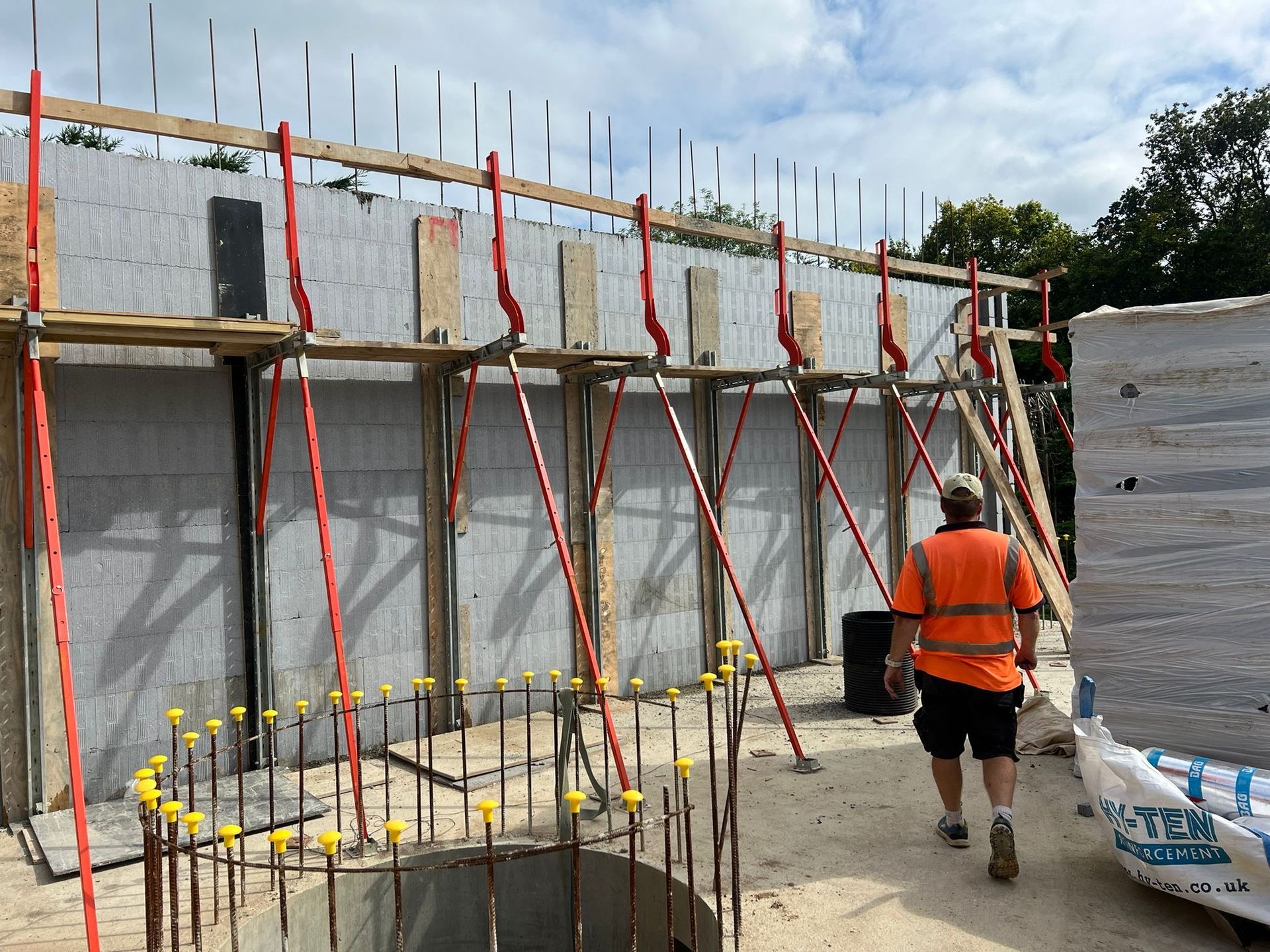
ICF (Insulated Concrete Formwork) is a modern method of construction that uses interlocking insulated blocks or panels, which are filled with reinforced concrete to create solid, energy-efficient walls.
Unlike traditional builds, where insulation is added separately, ICF combines structure and insulation in one system.
ICF vs Brick & Block: The Key Differences
Strength & Durability
Traditional brick and block construction has been used for decades, but ICF offers significantly higher structural strength due to its reinforced concrete core.
- ICF structures are highly resistant to weather, impact, and ground movement
- Longer lifespan with reduced maintenance
- Excellent performance in extreme conditions
Conclusion:
For long-term durability, ICF has a clear advantage.
Engergy Efficiency
Energy performance is one of the biggest reasons for the rise of ICF in the UK.
- ICF walls are highly insulated and airtight
- Lower U-values compared to traditional builds
- Reduced heating and cooling costs
In contrast, brick and block buildings rely on additional insulation layers, which can lead to thermal bridging if not installed correctly.
Conclusion:
ICF is far superior for energy efficiency and meeting modern regulations.
Build Speed
Speed is a mjor factor for developers, designers, homeowners and contractors.
- ICF systems are quick to assemble
- Less reliance on multiple trades
- Reduced delays due to the weather
Traditional construction involves several stages; bricklaying, insulation, cavity work, which can all slow projects down.
Conclusion:
ICF can significantly reduce build time and time on site.
Cost: Short-Term vs Long-Term
ICF can have slightly higher upfront costs compared to traditional methods, depending on the project. However:
- Lower energy bills over time
- Reduced maintenance costs
- Faster build = lower labour costs
Conclusion: Over the lifespan of a building, ICF is often more cost-effective.
Sustainability
Sustainability is becoming a key consideration in UK construction.
- ICF reduces energy consumption
- Longer building lifespan = lower environmental impact
- Helps meet future building regulations
Traditional methods can still perform well, but often require additional materials and upgrades to achieve the same standards.
Pros and Cons of ICF Construction
Pros for ICF Construction in the UK:
- Excellent energy efficiency
- Strong and durable structure
- Faster build times
- Reduced long-term costs
Cons of ICF Construction:
- Slightly higher upfront investment
- Requires experienced contractors
Why More UK Projects Are Choosing ICF in 2026
ICF is no longer a niche construction method. It is now being widely adopted across the UK as the industry responds to rising energy costs, stricter building regulations, and an increasing demand for more sustainable homes.
At the same time, developers and contractors are under pressure to deliver projects more efficiently, with faster build times and greater long-term performance. As a result, ICF is becoming a preferred solution for a wide range of construction projects.
For developers, self-builders, and commercial clients alike, ICF offers a future-proof approach that aligns with modern building standards and expectations.
ICF is ideal for a wide range of construction projects, including new builds, extensions, and basements. It is particularly well suited to energy-efficient homes and developments focused on long-term value and performance.
If you're looking for a building method that combines strength, efficiency, and sustainability, ICF is well worth considering.
Call us today on +44 (0)7717 014006, email us your contact information and a description of your ICF project at info@mcgrathcivilsltd.co.uk
or complete the form below and a member of our team will be pleased to discuss your project in more detail.
Speak to Us
At McGrath Civils, we specialise in delivering high-quality ICF construction projects across London and the Home Counties.
If you're planning a project or want to learn more about whether ICF is right for you, get in touch with our team today.
Speak To Us Today To See How We Can Help You!
Complete This form
A member of the McGrath Civils new business team will contact you to discuss your new groundworks enquiry. We aim to respond within 4 business hours. If you would like to speak to us sooner, please call us.